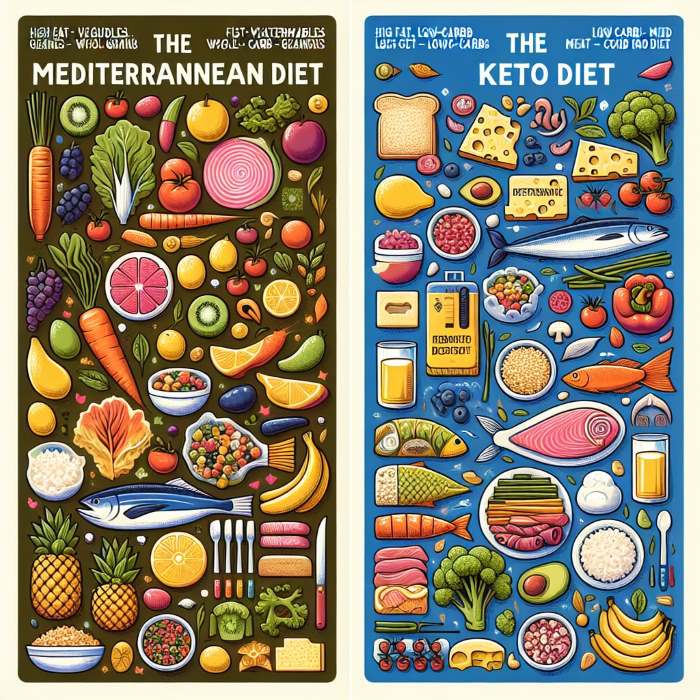
The Mediterranean Diet emphasizes fruits, vegetables, and whole grains, while the Keto Diet focuses on high-fat, low-carb foods. Both diets aim for healthy eating but differ in macronutrient distribution.
Choosing a diet often correlates with specific health goals and lifestyle preferences. The Mediterranean Diet, rich in fiber and diverse nutrients, promotes heart health and is known for its potential to reduce chronic disease risks. It involves a variety of minimally processed foods and a high intake of unsaturated fats, primarily from olive oil.
On the other hand, the Keto Diet drives the body into ketosis, a state where fat is burned for fuel instead of carbohydrates, which may lead to rapid weight loss. This diet entails a substantial consumption of fats, a moderate protein intake, and minimal carbs, which can be restrictive for some.
Individuals considering the Mediterranean Diet Vs Keto Diet should assess their health objectives and dietary preferences, possibly with a healthcare professional, to make an informed choice that suits their lifestyle and nutritional needs.
Dietary Philosophies Unveiled
Exploring diets can be a labyrinth of choices. Two popular paths many take are the Mediterranean and the Keto diets, each with its unique philosophy and approach to health. Understanding their essentials helps in deciding the right fit for a lifestyle and nutritional balance.
Mediterranean Diet Essentials
The Mediterranean Diet reflects the eating habits of people living near the Mediterranean Sea. It emphasizes:
- Fruits and Vegetables: A rainbow on your plate every day.
- Whole Grains: Nutty, full of fiber, hearty breads and pastas.
- Healthy Fats: Olive oil is a staple in cooking and dressing.
- Nuts and Seeds: Snack on almonds or sprinkle sesame on dishes.
- Seafood: Fish takes the front seat at least twice a week.
- Moderate Dairy: Cheeses and yogurts in moderation.
- Limited Red Meat: Savoring red meat on rare occasions.
With an emphasis on plant-based foods and monounsaturated fats, this diet is about variety and moderation. Balanced portions with a dash of herbs bring both flavor and health to the table.
Keto Diet Basics
The Keto Diet takes a low-carb, high-fat approach. Its basics include:
| Food Group | Focus |
|---|---|
| Fats | Aiming for healthy fats like avocados and coconut oil. |
| Proteins | Lean meats, poultry, and fish are the main protein sources. |
| Carbohydrates | Severely limited to maintain ketosis, often below 50 grams a day. |
Followers avoid sugars, grains, fruits, and high-carb vegetables to keep the body in a state of ketosis. This state allows the body to burn fat for energy instead of carbs. It’s about tracking macros and sticking to the fat-protein-carb ratio.
Nutritional Breakdown
Understanding the nutritional content of diets is key to choosing the right one for your health. Both the Mediterranean Diet and the Keto Diet offer unique benefits. Yet, their nutritional frameworks differ greatly. Let’s break down their nutritional profiles to see how they compare.
Mediterranean Diet Pyramid
The Mediterranean Diet emphasizes a balanced, diverse intake of nutrients. It’s based on a pyramid structure. The base consists of fruits, vegetables, and whole grains. Eaten daily, these provide vitamins, minerals, and fiber.
At the next level, fish, poultry, beans, and eggs supply protein and healthy fats. Nuts and olive oil, used sparingly, offer more good fats. Red meats and sweets sit at the peak, suggesting limited consumption.
| Food Group | Frequent Consumption | Moderate Consumption | Limited Consumption |
|---|---|---|---|
| Fruits/Vegetables/Whole Grains | Daily | – | – |
| Fish/Poultry/Beans/Eggs | – | Weekly | – |
| Nuts/Olive Oil | – | Daily | – |
| Red Meats/Sweets | – | – | Rarely |
Keto Diet Pyramid
The Keto Diet takes a different approach. It focuses on high-fat, low-carb foods to induce ketosis. This means the body burns fat for energy, not carbs.
Macronutrients are divided into specific ratios; usually, about 70-80% fat, 20-25% protein, and 5-10% carbohydrates. Keto advocates stress quality fats like avocados, cheese, and nuts. Lean meats and low-carb veggies are also key.
- Fats: 70-80%
- Proteins: 20-25%
- Carbohydrates: 5-10%
| Food Group | Frequent Consumption | Moderate Consumption | Limited Consumption |
| Healthy Fats | Avocado, Olive Oil, Coconut Oil | Nuts and Seeds | – |
| Protein Sources | Fatty Fish, Poultry, Eggs | – | – |
| Non-Starchy Vegetables | Leafy Greens, Cruciferous Vegetables, Bell Peppers, Zucchini, Asparagus | – | – |
| Full-Fat Dairy | Cheese, Heavy Cream, Butter | – | – |
| Low-Carb Fruits | – | Berries, Avocado | – |
| Nuts and Seeds | – | Almonds, Walnuts, Pecans, Flaxseeds, Chia Seeds | – |
| Herbs, Spices, Flavorings | – | – | – |
Health Impacts Compared
Exploring the health impacts of popular diets is crucial when choosing the right lifestyle change. The Mediterranean and Keto diets are famous for their health benefits. Let’s delve into their effects on heart health, weight management, and blood sugar control.
Heart Health And Cholesterol
The Mediterranean diet is known for heart health benefits. It’s rich in omega-3 fatty acids, vegetables, and whole grains. These components help in maintaining healthy cholesterol levels and reducing the risk of cardiovascular diseases.
In contrast, the Keto diet focuses on high-fat intake which can increase levels of LDL cholesterol (bad cholesterol). However, it may raise HDL cholesterol (good cholesterol) as well. The key is balance and monitoring how your body reacts to dietary changes.
Weight Loss And Body Composition
Both diets can lead to weight loss, yet they work differently. The Keto diet triggers ketosis, a state where the body burns fat for fuel. This often results in quick weight reduction.
Meanwhile, the Mediterranean diet emphasizes nutrient-dense foods and long-term healthy eating habits. It may lead to gradual, but sustainable weight loss. It’s important to choose a diet that aligns with your lifestyle and weight loss goals.
Diabetes And Blood Sugar Control
When it comes to diabetes and blood sugar levels, both diets have something to offer. The Keto diet can significantly lower blood sugar and improve insulin sensitivity. This is due to the reduced intake of carbohydrates.
On the other hand, the Mediterranean diet includes complex carbs that have a lower glycemic index. These help in maintaining steady blood sugar levels. Following either diet may reduce the risk of developing type 2 diabetes and can be part of a healthy diabetic meal plan.
Lifestyle And Sustainability
Lifestyle and Sustainability are key when choosing a diet that fits your daily routine and future goals. The Mediterranean and Keto diets differ not just in food choices but in how easily they weave into everyday life.Â
Cultural And Culinary Flexibility
The Mediterranean diet boasts a rich array of foods. It draws from diverse culinary histories. This means it fits well with many social and family events. You can enjoy a wide range of fruits, vegetables, grains, and lean proteins. This flexibility ensures meals are always fresh, colorful, and full of flavor. The Keto diet has stricter rules, which might limit some social dining situations.
For example, Keto emphasizes high-fat, low-carb foods. Birthday cakes or pasta dishes at gatherings might be off the menu.
Table: Typical Foods in Mediterranean and Keto Diets
| Mediterranean Diet | Keto Diet |
|---|---|
| Whole grains | Fatty meats |
| Fruits and vegetables | Low-carb vegetables |
| Beans and nuts | High-fat dairy |
| Seafood and lean meats | Seeds and nuts |
Long-term Adherence Potential
Maintaining a diet over time is crucial for lasting health benefits. Studies show the Mediterranean diet is easier to stick to in the long haul. It aligns with the World Health Organization’s guidelines for a balanced, healthy diet. This increases its sustainability.
Users report feeling satisfied and enjoying the variety it offers. Keto, on the other hand, requires substantial carb reduction. This dramatic shift can be challenging to maintain permanently. Keto can lead to significant weight loss but might be hard to follow for years.
- Varied and balanced meals
- No strict calorie counting
- Inclusion of all food groups
- Compatibility with social dining
Adaptability In Special Diets
Choosing a diet that fits your lifestyle and needs is vital. The Mediterranean and Keto diets both offer flexibility. But they do this in different ways. Now, let’s see how each supports special diets like vegetarian, vegan, and those with food allergies.
Vegetarian And Vegan Adaptations
The Mediterranean diet is naturally vegetarian and vegan-friendly. It focuses on plant-based foods. These include fruits, vegetables, and whole grains.
Swap meat for beans and lentils. Use nuts and seeds for added protein. Keto is tougher for vegetarians. But it’s not impossible. Use high-fat, plant-based foods like avocados and coconut oil. Vegan keto-eaters may struggle more. But soy products and vegan cheeses can help.
- Vegetarian Mediterranean Options:
- Legumes
- Nuts
- Seeds
- Vegan Keto Options:
- Soy products
- Almond milk
- Low-carb vegetables
Food Allergies And Intolerances
Both diets can adapt to food allergies. The Mediterranean diet’s variety makes it easy. You can always find alternatives.
For example, replace nuts with seeds if you’re allergic. Keto also offers options. Many common allergens like gluten are already cut out. For dairy allergies, use coconut or almond products.
| Mediterranean Diet Allergy Swaps | Keto Diet Allergy Swaps |
|---|---|
| Nut Allergy: Use seeds | Gluten Allergy: Focus on meats |
| Dairy Allergy: Try plant-based milks | Dairy Allergy: Use nut-based milks |
Remember: Always customize your diet to fit your health needs. Check with professionals before making changes, especially with allergies.
Expert Opinions And Research Evidence
Delving into the realm of diets, two contenders stand out: the Mediterranean Diet and the Keto Diet. Both have their evangelists and skeptics. Let’s explore what experts say and what research reveals about these popular eating plans.
Scientific Studies Showdown
Studies have placed these diets under the microscope. Research gives the Mediterranean Diet kudos for heart health. A landmark study published in the New England Journal of Medicine showed participants on this diet had a lower risk of cardiovascular disease.
The Keto Diet boasts impressive weight loss results. A study in the Journal of Clinical Endocrinology & Metabolism found rapid weight improvement in Keto followers. Yet, some researchers question its long-term impact on heart health due to its high fat intake.
| Diet Type | Benefits | Concerns |
|---|---|---|
| Mediterranean Diet | Better heart health | Can be high in calories |
| Keto Diet | Quick weight loss | Potential heart risks |
Nutritionists Weigh
- Balanced Approach: Nutritionists often praise the Mediterranean Diet for its variety and balance. It includes whole grains, lean proteins, and healthy fats.
- Restrictive Nature: Keto requires cutting out carbs, which can be challenging to maintain. It emphasizes fats and proteins, which may limit nutrient intake.
Nutritionist opinions and scientific evidence combine to create a nuanced view. The Mediterranean Diet garners support for long-term health benefits, while the Keto Diet is often chosen for quicker weight loss ambitions.
Both diets have merits, but individual health goals and medical advice should guide personal choices.
Frequently Asked Questions For Mediterranean Diet Vs Keto Diet
What is the Mediterranean Diet?
The Mediterranean Diet emphasizes fruits, vegetables, whole grains, nuts, and olive oil. It includes moderate wine and lean protein from fish and poultry. It’s heart-healthy and focuses on plant-based, whole foods.
How does Keto Diet Promote Weight Loss?
Keto Diet induces ketosis, where the body burns fat for fuel. This high-fat, low-carb approach reduces insulin levels, leading to weight loss. It’s effective for short-term fat reduction.
Can the Mediterranean Diet Improve Heart Health?
Yes, the Mediterranean Diet is known to improve heart health. It’s rich in monounsaturated fats and omega-3s which lower cholesterol and blood pressure, decreasing heart disease risk.
Is Mediterranean Diet vs Keto Diet Better Overall?
Both diets have benefits; the best depends on personal goals. Mediterranean Diet is sustainable and heart-healthy. Keto is effective for rapid weight loss but can be restrictive long-term.
Conclusion
Deciding between the Mediterranean and Keto diets depends on your health goals and preferences. Both paths offer benefits, like weight management and improved heart health. Tailor your choice to fit your lifestyle and dietary needs. Remember, consulting a nutritionist can provide personalized guidance.
Embrace the journey to well-being with the diet that resonates with you.