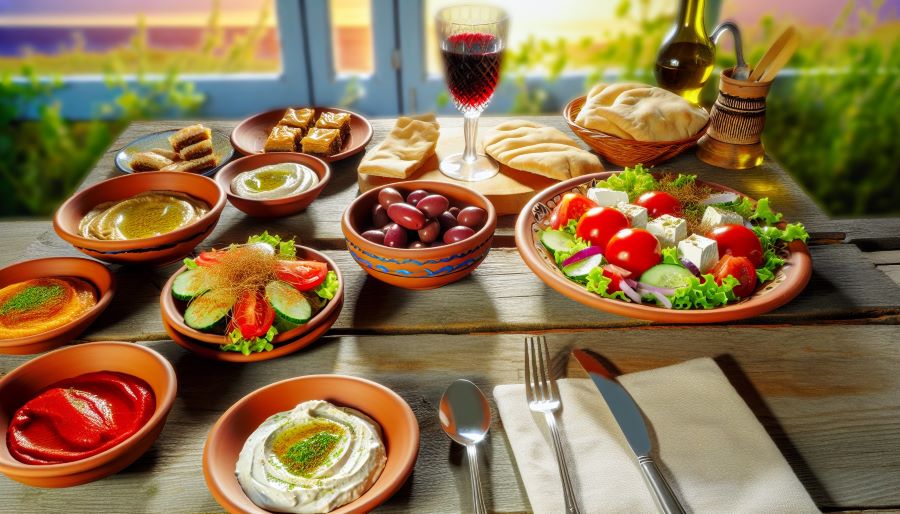
A typical Mediterranean dinner consists of fresh seafood, grilled meats, vegetables, olive oil, and herbs. It often includes dishes like Greek salad, grilled fish, kebabs, falafel, and couscous.
The Mediterranean diet is renowned for its health benefits and delicious flavors. It emphasizes the use of olive oil, whole grains, lean protein, and a variety of fruits and vegetables. This cuisine is rich in nutrients such as omega-3 fatty acids, antioxidants, and fiber.
The region’s diverse culinary traditions offer a wide array of dishes influenced by countries like Spain, Italy, Greece, and Morocco. The combination of fresh, simple ingredients and the use of herbs and spices creates a vibrant and satisfying dining experience. A typical Mediterranean dinner is a celebration of wholesome, flavorful, and nutritious food that reflects the bountiful and diverse landscapes of the Mediterranean region.
The Mediterranean Diet
The Mediterranean Diet is a traditional eating pattern that is based on the cuisine and lifestyle of countries bordering the Mediterranean Sea, such as Greece, Italy, and Spain. This diet has gained recognition worldwide for its numerous health benefits and delicious, flavorful dishes. Let’s delve into the key components and health benefits of the Mediterranean diet.
Key Components Of The Mediterranean Diet
The Mediterranean diet emphasizes the consumption of various whole and minimally processed foods. Here are the key components of this wholesome diet:
- Fruits and vegetables: Including a wide variety of fresh fruits and vegetables in your meals provides a rich source of essential vitamins, minerals, and antioxidants that promote good health.
- Whole grains: Whole grains like quinoa, brown rice, and whole wheat bread are abundant in fiber and complex carbohydrates, contributing to improved digestion and stable energy levels.
- Healthy fats: Olive oil, a staple in Mediterranean cooking, is high in monounsaturated fats that are beneficial for heart health. Nuts, seeds, and avocados are also excellent sources of healthy fats.
- Lean proteins: The Mediterranean diet encourages the consumption of lean proteins such as fish, chicken, and legumes. These are rich in essential amino acids and omega-3 fatty acids, which support brain and heart health.
- Herbs and spices: Mediterranean dishes are often seasoned with herbs and spices like basil, oregano, and garlic. These natural flavorings enhance the taste of meals without the need for excessive salt or unhealthy condiments.
Health Benefits Of The Mediterranean Diet
The Mediterranean diet offers a range of health benefits that contribute to overall well-being and longevity. Here are some key advantages:
- Reduced risk of heart disease: The inclusion of healthy fats, such as those found in olive oil and fish, helps lower cholesterol levels and reduce the risk of heart disease.
- Improved brain health: The omega-3 fatty acids found in fish and nuts have been linked to better cognitive function and a reduced risk of cognitive decline.
- Weight management: The Mediterranean diet focuses on whole, nutritious foods, which can aid in weight management and reduce the risk of obesity.
- Lowered inflammation: The consumption of fruits, vegetables, and healthy fats in this diet helps combat inflammation, which is a common factor in chronic diseases.
- Protection against chronic diseases: Research suggests that following the Mediterranean diet can protect against various chronic diseases, including type 2 diabetes, certain cancers, and neurodegenerative disorders.
Adopting the Mediterranean diet can not only lead to a healthier lifestyle but also allow you to enjoy delicious, satisfying meals that promote your overall well-being. By incorporating the key components of this diet into your daily routine, you can experience the numerous health benefits it has to offer.
What Makes a Typical Mediterranean Dinner?
The Mediterranean diet is renowned for its health benefits, including a reduced risk of heart disease and a longer lifespan. A typical Mediterranean dinner is characterized by a vibrant array of fresh and wholesome ingredients, reflecting the region’s rich culinary heritage and focus on balance and moderation.
Variety of Vegetables And Fruits
A typical Mediterranean dinner prominently features a variety of fresh vegetables and fruits. These may include tomatoes, cucumbers, bell peppers, spinach, kale, zucchini, eggplant, oranges, figs, and more. The abundance of colorful produce provides essential vitamins, minerals, and antioxidants that support overall well-being.
Whole Grains and Legumes
Whole grains and legumes, such as quinoa, bulgur, lentils, and chickpeas, are integral to the Mediterranean diet. These nutrient-dense foods offer a rich source of fiber, protein, and complex carbohydrates, contributing to sustained energy levels and improved digestive health.
Healthy Fats and Oils
Healthy fats and oils, like olive oil, nuts, and seeds, are key components of a Mediterranean dinner. These sources of monounsaturated and polyunsaturated fats protect against cardiovascular disease and inflammation while also enhancing the flavor of dishes.
Lean Proteins
Lean proteins, including fish, poultry, and occasionally red meat, are consumed in moderation in a typical Mediterranean dinner. Fish, especially oily varieties like salmon and sardines, provide omega-3 fatty acids essential for heart health and brain function.
Herbs and Spices
Mediterranean cuisine is enriched with an abundance of herbs and spices, such as oregano, basil, thyme, and garlic, which elevate the taste profile of dishes. These natural flavor enhancers are known for their antioxidant and anti-inflammatory properties.
Wine in Moderation
Wine, particularly red wine, is enjoyed in moderation with a Mediterranean dinner, contributing to the overall enjoyment of meals and potentially offering cardiovascular benefits when consumed responsibly.
Popular Mediterranean Dinner Dishes
A typical Mediterranean dinner is a delightful combination of flavors, colors, and textures that reflect the rich culinary traditions of the region. From Greek moussaka to Spanish paella, the Mediterranean dinner table is adorned with a wide variety of mouthwatering dishes that are not only delicious but also reflect the vibrant culture of the Mediterranean.
Greek Moussaka
Greek moussaka is a beloved dish that layers seasoned ground meat, like lamb or beef, with eggplant and a heavenly béchamel sauce. It’s then baked to perfection, creating a flavorful and comforting casserole that’s a staple of Greek cuisine.
Italian Caprese Salad
A refreshing and simple Italian dish, the Caprese salad is all about fresh ingredients: ripe tomatoes, mozzarella cheese, and basil, drizzled with olive oil and balsamic vinegar. It’s a perfect starter for any Mediterranean dinner.
Spanish Paella
Spanish paella is a flavorful rice dish that comes in many variations, often featuring seafood, chicken, and a colorful assortment of vegetables. The key to an authentic paella lies in the rich, saffron-infused broth that infuses the rice with vibrant flavor.
Moroccan Tagine
This slow-cooked stew hailing from Morocco tantalizes the senses with its aromatic blend of spices, tender meats, and an assortment of dried fruits and olives. Served with couscous or bread, this dish is a treasure trove of bold flavors.
Turkish Dolmas
Turkish dolmas are grape leaves stuffed with a tantalizing mixture of rice, pine nuts, and aromatic herbs. Often served with a dollop of yogurt or a squeeze of lemon, these little parcels of goodness are a true delight for the taste buds.
Tips For Planning a Mediterranean Dinner
A typical Mediterranean dinner is characterized by fresh and wholesome ingredients like olive oil, vegetables, seafood, and whole grains. Incorporating flavors from countries like Greece, Italy, and Spain, a Mediterranean dinner is a healthy and delicious choice.
Incorporate a Rainbow of Colors
When planning a Mediterranean diet dinner, it’s important to incorporate a variety of vibrant colors on your plate. Not only do colorful dishes look appetizing, but they also provide a wide range of nutrients that are essential for a balanced diet.
By including a rainbow of colors, you can ensure that you’re getting a diverse array of vitamins, minerals, and antioxidants. So, make your meals visually appealing by adding red tomatoes, green leafy vegetables, purple eggplants, yellow bell peppers, and orange carrots to your Mediterranean dinner spread.
Choose Seasonal and Local Ingredients
One of the key principles of Mediterranean cuisine is using fresh ingredients that are in season. By selecting seasonal and local produce, you not only support local farmers and businesses but also ensure that your meals are packed with flavor. Seasonal ingredients are at their peak in terms of taste and nutritional value, making them perfect for a Mediterranean dinner. So, visit your local farmer’s market or grocery store to discover the best seasonal produce available, adding freshness and authenticity to your dishes.
Experiment with Different Herbs And Spices
Herbs and spices play a crucial role in Mediterranean cooking, adding depth and complexity to the flavors of your dishes. Try incorporating a variety of aromatic herbs like basil, oregano, thyme, and rosemary to enhance the taste of your Mediterranean dinner. Additionally, spices such as cumin, paprika, and turmeric can be used to add a touch of warmth and exotic flavors. Don’t be afraid to experiment with different combinations and create your own signature blend, making your Mediterranean dinner truly unique.
Focus on Plant-based Dishes
Plant-based dishes are at the heart of Mediterranean cuisine, with an emphasis on fresh fruits, vegetables, legumes, and whole grains. These ingredients not only provide an abundance of nutrients but also contribute to a healthier and more sustainable diet. By focusing on plant-based dishes, you can create Mediterranean meals that are not only delicious but also beneficial for your overall well-being. So, swap out meat with plant-based proteins like chickpeas, lentils, and tofu to enjoy the health benefits of this traditional Mediterranean approach to eating.
Include a Variety Of Textures
Mediterranean cuisine is known for its rich and diverse textures, which add depth and interest to every bite. When planning a Mediterranean dinner, aim to include a variety of textures to create a well-rounded dining experience. Pair creamy hummus with crunchy pita chips, serve tender grilled vegetables alongside a crispy salad, or add a sprinkle of toasted nuts to your dish for an extra crunch.
By combining different textures, you can elevate the overall enjoyment of your Mediterranean dinner and delight your taste buds. Incorporating a rainbow of colors, choosing seasonal and local ingredients, experimenting with different herbs and spices, focusing on plant-based dishes, and including a variety of textures are all essential tips for planning a delightful Mediterranean dinner.
By following these guidelines, you’ll be able to create a meal that is not only visually appealing but also nourishing and satisfying. So, let your creativity flow and enjoy the flavors of the Mediterranean in every bite!
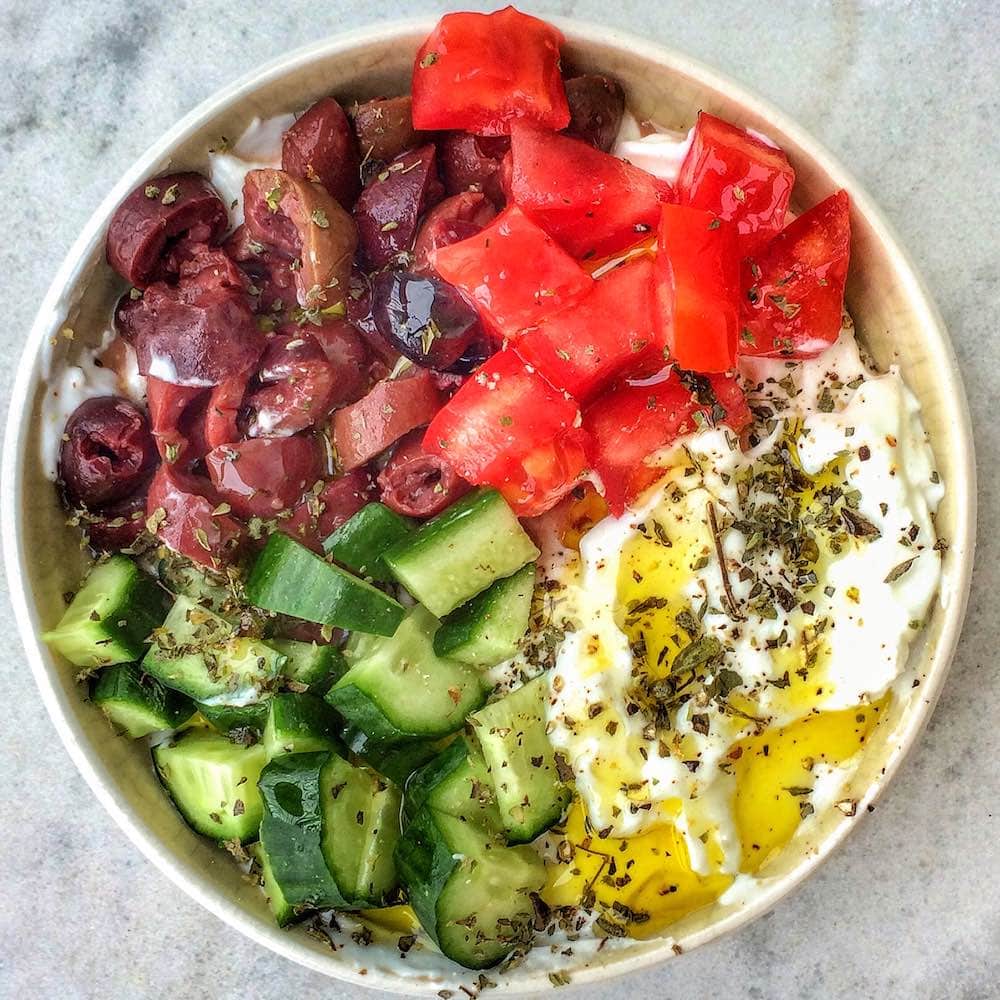
Credit: www.olivetomato.com
Frequently Asked Questions About What Is a Typical Mediterranean Dinner?
What Are the Key Ingredients in a Typical Mediterranean Dinner?
A typical Mediterranean dinner incorporates fresh ingredients such as olive oil, tomatoes, garlic, and herbs like basil, oregano, and thyme. Lean proteins like fish and chicken are often included, along with whole grains, legumes, and plenty of colorful vegetables.
Are Mediterranean Dinners Healthy for Weight Loss?
Yes, Mediterranean dinners can be a healthy choice for weight loss. The diet emphasizes whole foods, minimizing processed options, and includes heart-healthy fats, lean proteins, and nutrient-dense fruits and vegetables. Portion control and moderation are key, making it a sustainable and balanced approach to weight management.
Can You Suggest Some Mediterranean Dinner Recipes for Beginners?
If you’re new to Mediterranean cuisine, try simple dishes like grilled chicken with roasted vegetables. You can also try a Greek salad with feta cheese and olives. Another easy option is a shrimp and vegetable stir-fry with a squeeze of lemon, or a pasta primavera using whole wheat pasta and fresh vegetables.
Conclusion
A typical Mediterranean dinner is a delightful culmination of fresh and flavorful ingredients that showcase the region’s rich culinary heritage. From vibrant salads with tangy dressings to succulent grilled meats and fish paired with hearty grains or legumes, this cuisine offers a feast for the senses. Everyone should embrace a healthy and balanced approach to eating. Mediterranean dinners not only nourish the body but also transport you to the sun-kissed shores of the Mediterranean.