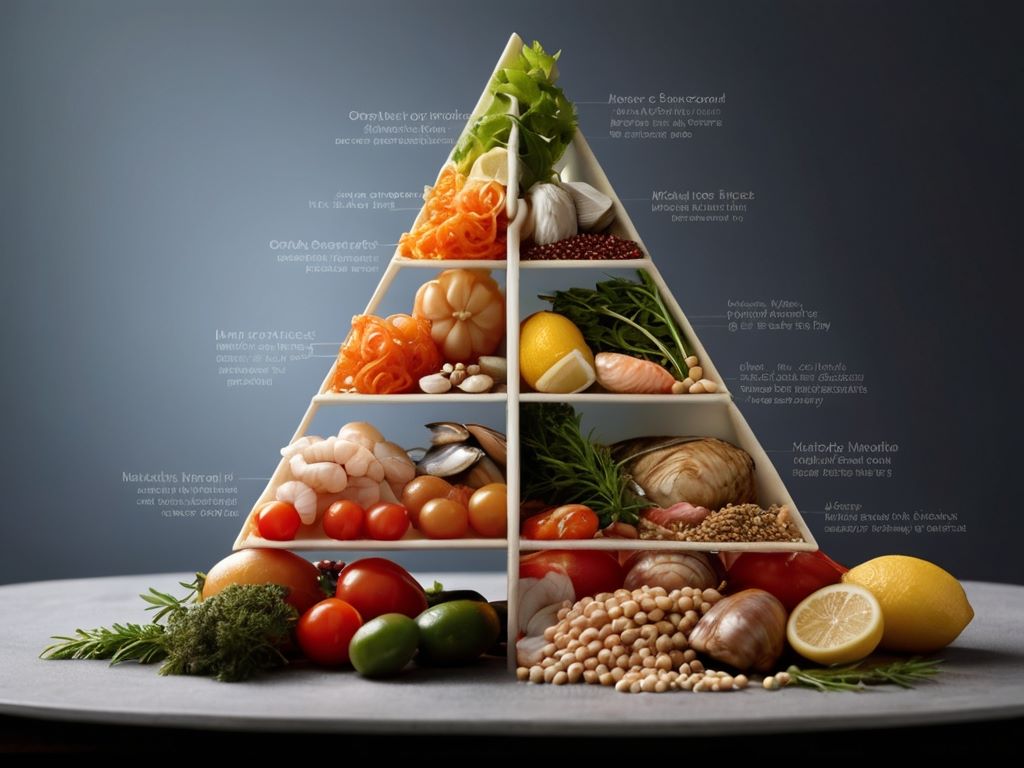
The Mediterranean Diet Pyramid illustrates an ideal distribution of foods to eat within the Mediterranean-style diet. It emphasizes plant-based foods, lean proteins, and healthy fats.
Embracing the Mediterranean diet means prioritizing whole grains, fruits, vegetables, beans, herbs, spices, and nuts. Olive oil reigns supreme as the primary source of fat, championing monounsaturated fats that contribute to heart health. Fish and seafood appear often, recommended at least twice a week, supporting omega-3 fatty acids intake.
The pyramid suggests poultry, eggs, cheese, and yogurt in moderate portions, daily to weekly. Red meats and sweets find their place at the apex, enjoyed on rare occasions. This dietary approach is complemented by physical activity and enjoying meals with others, encapsulating not only a nutritional outlook but a lifestyle. The Mediterranean Diet Pyramid serves as a practical guide for creating nutritious, balanced meals aligned with the dietary patterns typical of the Mediterranean region, promoting overall health and well-being.
Roots Of The Mediterranean Diet
The Mediterranean Diet finds its roots deep in sun-drenched olive groves and azure coasts. This diet reflects the culinary traditions of people living by the Mediterranean Sea. It has evolved over millennia, influencing and being influenced by many cultures and civilizations.
Cultural And Historical Background
The diet’s foundation stones were laid by ancient civilizations like the Greeks and Romans. Trade routes spread these practices to neighboring areas. The core of this diet involves fresh produce, whole grains, and heart-healthy olive oil. It includes moderate fish and wine consumption, with an emphasis on community and family meal-sharing.
Key components include:
- Olive oil as a primary fat source
- Abundance of fruits and vegetables
- Legumes and whole grains for fiber
- Moderate amounts of dairy and fish
- Minimal red meat and processed foods
Key Regions And Dietary Patterns
The Mediterranean Diet Pyramid showcases a harmonious blend of flavors sourced from key regions. These include Southern Italy, Greece, and Spain. Coastal diets lean heavily on seafood and fresh produce. Inland regions favor legumes, cheeses, and poultry.
| Region | Dietary Focus |
|---|---|
| Southern Italy | Tomatoes, olives, citrus fruits, fish |
| Greece | Feta cheese, lamb, leafy greens, olives |
| Spain | Seafood, almonds, saffron, beans |
In each of these areas, locals tailor the diet to the riches of their land. This creates varied, balanced dietary patterns that support health and longevity. The Mediterranean Diet encourages whole foods and a lifestyle of moderation and balance.
Mediterranean Diet Pyramid Basics
Understanding the Mediterranean Diet Pyramid is key to adopting this healthy eating lifestyle. It is a visual guide. It helps people see what foods to eat. It also shows how much and how often to eat them. Let’s explore the basics of this nutritious pyramid.
Structure And Food Placement
The structure of the Mediterranean Pyramid is easy to follow. It has different levels. Every level represents a food group. The bottom level has foods you should eat the most. It includes fruits, vegetables, grains, olive oil, beans, nuts, legumes, seeds, herbs, and spices. The second level has fish and seafood. You should eat these often, but not daily. The next level includes poultry, eggs, cheese, and yogurt. These are moderate portions. They are not daily. The top of the pyramid has meats and sweets. These are less frequent.
Comparison With Other Dietary Pyramids
When compared to other dietary pyramids, the Mediterranean Diet Pyramid stands out. It focuses on plant-based foods. The American pyramid has more red meat, poultry, and sweets. It also has dairy at every meal. The Mediterranean pyramid puts more emphasis on healthy fats like olive oil. It also encourages physical activity and eating with others. Both are important for a happy life.
Core Foods At The Pyramid’s Base
The Mediterranean Diet Pyramid highlights the significance of plant-based foods, representing a pattern of eating that fosters health and longevity. The base of the pyramid underscores core foods you should eat frequently in ample quantities. This nutritional foundation provides a plethora of flavors and health benefits. Let’s explore the key components at the pyramid’s base.
Fruits, Vegetables, And Whole Grains
Fruits and vegetables are pillars of the Mediterranean diet, brimming with vitamins, minerals, and fiber, promoting a healthy body and mind. Eating the rainbow—choosing items of different colors—guarantees a wide range of nutrients.
- Apples, oranges, and berries offer sweet variety.
- Leafy greens, tomatoes, and cucumbers fill salads with crunch and nutrients.
- Whole grains like quinoa and brown rice support digestion and energy levels.
Whole grains, either intact or as whole grain bread and pasta, provide essential fiber. They form the basis of many sustaining meals within the diet.
Olive Oil As A Dietary Staple
Olive oil reigns supreme in the Mediterranean Diet, drizzled over salads and used in cooking. Rich in monounsaturated fats and polyphenols, it supports heart health and battles inflammation. The residents of the Mediterranean region have long known the simple elegance and profound health implications of this liquid gold.
| Olive Oil Use | Benefits |
|---|---|
| Salad Dressing | Enhances flavor, adds healthy fats. |
| Cooking | High smoke point, preserves nutrients. |
| Dipping | Substitute for butter, adds antioxidants. |
Integrating olive oil into daily meals is simple and beneficial. A staple in the Mediterranean kitchen, it can transform a simple dish into a heart-healthy feast.
Role Of Plant-based Proteins
The Mediterranean Diet Pyramid emphasizes a plant-forward approach to eating. Understanding the role of plant-based proteins is key to this nutritious diet. These proteins are crucial for a balanced diet and sustainable eating habits.
Plant-based proteins come from the Earth. They can be good for our health. Let’s explore some important plant foods in the Mediterranean Diet.
Legumes
Legumes are a big part of the Mediterranean Diet. They include beans, lentils, chickpeas, and peas. Rich in protein, legumes are a great choice for meals. They are also good for the planet because they grow well without hurting the land much.
- Lentils: Good for heart and energy.
- Chickpeas: Used in hummus, high in protein.
- Beans: Many kinds, like kidney beans and black beans.
Nuts And Seeds
Nuts and seeds are tiny powerhouses in the Mediterranean Diet. They have good fats and protein. They help keep your heart strong. Eating a small amount each day is enough.
- Almonds: Snack on them for vitamin E.
- Walnuts: Good for brains, in salads or snacks.
- Sunflower seeds: Crunchy and full of vitamin B.
Health Benefits And Nutritional Value
Legumes, nuts, and seeds are not just tasty. They have lots of vitamins, minerals, and fiber. They can help your body stay strong and healthy. They can lower your chance of getting sick.
| Food | Key Nutrients | Benefits |
|---|---|---|
| Legumes | Protein, Fiber | Better heart health, more energy |
| Nuts | Healthy Fats, Protein | Good heart, better mood |
| Seeds | Vitamins, Minerals | Strong bones, more focus |
Choosing beans over meat sometimes can be good. Nuts and seeds make great snacks. They fill you up and give you energy.
Seafood And Its Position On The Pyramid
Seafood holds a special place on the Mediterranean Diet Pyramid. It sits just above plant-based foods, which form the pyramid’s foundation. This position reflects seafood’s role in a balanced Mediterranean diet and emphasizes moderation compared to daily consumed items.
Recommended Intake
The Mediterranean Diet Pyramid suggests eating seafood twice a week. This intake balances the diet and supports overall health. Seafood options range from fatty fish, like salmon, to shellfish, like shrimp. Each kind offers a unique nutrient profile. It’s important to include variety to reap the different health benefits.
Sustainable Choices
Choosing sustainable seafood is crucial for health and the environment. Opt for species that are plentiful and fished or farmed responsibly. Here’s a quick list of sustainable picks:
- Wild-caught Alaskan salmon
- Pacific sardines
- Farmed trout
Look for certification labels like MSC or ASC when shopping. These ensure that seafood comes from sustainable sources.
Nutrients
Seafood is a powerhouse of important nutrients. It’s rich in omega-3 fatty acids, essential for heart and brain health. Fish is also a great source of protein and contains important vitamins and minerals. Here’s a table highlighting key nutrients:
| Type of Nutrient | Benefits |
|---|---|
| Omega-3 Fatty Acids | Improves heart health and cognitive function |
| Protein | Supports muscle growth and repair |
| Vitamins (A, D, and B-complex) | Boosts immune system and energy levels |
| Minerals (Iron, Zinc, Selenium) | Plays a role in numerous bodily functions |
Moderate Consumption Tiers
The Mediterranean Diet Pyramid illustrates a lifestyle that promotes health through balanced eating habits. As we explore the Moderate Consumption Tiers, let’s focus on the pyramid’s reliance on moderation for certain food groups. Unlike the base, which encourages generous consumption of fruits, vegetables, and whole grains, the middle portion advises moderate intake. Here, poultry, dairy, and eggs occupy key positions, suggesting a lower frequency of consumption compared to plant-based foods.
Poultry And Dairy Frequency
Chicken, turkey, and dairy play a versatile role in the Mediterranean Diet, being rich in protein and nutrients but consumed in moderation to maintain its healthful balance. The pyramid guides adherence to:
- Poultry: Enjoyed weekly, but not daily
- Dairy: Includes cheese and yogurt, consumed in small portions
Eggs And Their Controversial Placement
Eggs often spark debate due to their cholesterol content but are a nutritious option within the Mediterranean framework. The pyramid places eggs in the:
- Weekly consumption category: Around one to four eggs per week
Flexibility is key, allowing each individual to determine what moderate consumption of these proteins looks like for them based on personal nutritional needs and preferences.
Limited Foods At The Pyramid’s Peak
At the pinnacle of the Mediterranean Diet Pyramid, you’ll find foods to consume sparingly. These are the ‘sometimes’ foods, rich and flavorful yet not everyday staples for a balanced Mediterranean lifestyle.
Red Meats And Sweets
Red meats and sweets occupy the smallest portion at the pyramid’s peak, suggesting they should be enjoyed infrequently. Think of these not as daily delights, but rather as treats to savor on special occasions.
- Red meats: Save steak or lamb for monthly meals.
- Sweets: Reserve sugary desserts for the rare celebration.
Dietary Restrictions And Occasional Indulgences
Understanding restrictions helps maintain a healthy balance. The Mediterranean Diet champions moderation, allowing room for the occasional indulgence in the context of an overall nutritious diet.
| Food Category | Frequency |
|---|---|
| Red Meat | Monthly |
| Sweets | Weekly to Bi-Weekly |
Pay attention to portion sizes and quality. Indulge in a small piece of dark chocolate or a lean cut of red meat to satisfy cravings while aligning with the diet’s principles.
Beyond Nutrition: Lifestyle And Wellbeing
The Mediterranean Diet Pyramid stands for more than just food. It embodies a holistic way of life that incorporates a balanced approach to eating with a joyful and active lifestyle. This time-honored tradition is more than a diet. It’s a way to live that values the pleasure of eating healthy and delicious foods with family and friends.
Physical Activity
Being active is a cornerstone of the Mediterranean lifestyle. The pyramid doesn’t just display food; it includes daily physical activity as its foundation. This promotes a healthy body weight and enhances mood. Lively movement, whether it’s a brisk walk, dancing, or playing games, is a ritual as natural as breathing in this culture.
- Take stairs instead of elevators.
- Walk or bike to local destinations.
- Enjoy regular family walks after dinner.
Social Eating
Meals are a social affair in the Mediterranean culture. Enjoyment from food comes not only from taste but from the company. The act of sharing meals binds families and friends, reinforcing a network of support. The pyramid places emphasis on this aspect.
| Meal | Activity |
|---|---|
| Lunch | Gather with friends. |
| Dinner | Family time. |
Wine In Moderation
The pyramid acknowledges wine, but stresses moderation. A small glass of wine with meals is common. It reflects a balance and respect for one’s wellbeing. Nonetheless, it’s not a necessary component, and for those who abstain, the diet still offers ample health benefits. In moderation, wine complements meals and facilitates relaxation and social interaction.
Mediterranean Diet And Chronic Diseases
The Mediterranean Diet represents not just a way of eating, but a lifestyle that emphasizes fresh, wholesome foods and regular physical activity. It stands out for its potential to lower the risk of chronic diseases. Rich in fruits, vegetables, whole grains, lean proteins, and healthy fats, the diet draws on the eating habits of countries bordering the Mediterranean Sea.
Heart Health And Diabetes
Heart health can improve with this diet. It is low in saturated fats and high in nutrients that support a healthy heart. People who follow it tend to have lower levels of “bad” LDL cholesterol. The diet’s emphasis on olive oil, nuts, and fatty fish means it’s also high in omega-3 fatty acids. These acids are known to reduce inflammation and blood clot risks.
- Olive oil as primary fat source
- Nuts and seeds for snacks
- Fatty fish on the menu frequently
Diabetes risk may drop due to the diet’s fiber-rich foods. These foods help regulate blood sugar levels. The diet also limits red meat and sweets which are linked to higher diabetes risk.
| Food | Benefit |
|---|---|
| Whole grains | Stabilize blood sugar |
| Lean proteins | Maintain muscle health |
Obesity Prevention And Longevity
Obesity can be prevented with the Mediterranean Diet’s focus on portion control and high-fiber content. This leads to a feeling of fullness and less overeating. It offers a rich variety of plant-based foods, contributing to weight management and potentially extending lifespan. Traditional diets from this region naturally include fewer calories, aiding in maintaining a healthy weight.
- Favor vegetables and fruits for snacks.
- Choose whole-grain options.
- Incorporate legumes into meals.
Longevity is another key benefit. The diet is linked to a reduced risk of mortality from heart disease and cancer. The variety of antioxidant-rich foods can also play a role in this positive impact on the lifespan.
- Focus on plant-based meals
- Eat with friends and family for mental health
- Regular physical activity is part of the lifestyle
Challenges And Criticisms
The Mediterranean Diet Pyramid is renowned for its health benefits. Yet some issues make it less viable for everyone. Let’s explore these hurdles.
Accessibility and CostAccessibility And Cost
Fresh, high-quality ingredients are key to the Mediterranean diet. Yet, they can be costly and hard to find for many. Rural areas may lack stores with diverse food options. This limits choices for locals.
Also, people with tight budgets find the cost of fish and olive oil challenging. They might opt for cheaper, less nutritious alternatives. Here’s a table breaking down potential costs for a sample Mediterranean shopping list:
| Item | Cost |
|---|---|
| Fresh Vegetables | $20-$40 |
| Fish | $15-$30 |
| Extra Virgin Olive Oil | $10-$20 |
| Nuts & Seeds | $5-$10 |
Adaptation To Non-mediterranean Cultures
Adapting the Mediterranean Diet outside its origin can be tough. It relies on regional foods and cooking styles. This feels unfamiliar to many and can discourage adherence.
In addition, certain cultural cuisines may clash with the Mediterranean Diet’s guidelines. Items standard in one culture might be a ‘sometimes’ food on the pyramid. This creates a barrier to adopting the diet fully.
Non-Mediterranean regions may need to adjust the diet to fit their available products. This has sparked debate on authenticity and benefits among experts. Here’s a list of common adjustments and their impacts:
- Replacing olive oil with more accessible oils, affecting nutritional value.
- Substituting traditional fish varieties with local fish, altering taste and possibly health effects.
- Integrating non-native fruits and vegetables, which can affect the overall diet balance.
Adopting The Mediterranean Diet
Embracing the Mediterranean Diet means more than just changing what you eat. It is a lifestyle that emphasizes eating whole foods, staying active, and sharing meals with others. The Mediterranean Diet Pyramid guides us in making healthy choices. It shows us which foods to eat often and which to have sparingly.
Creating A Personalized Meal Plan
Transitioning to the Mediterranean Diet starts with a plan tailored to your needs. Begin by assessing your current diet. Identify areas for improvement. Increase your intake of fruits, vegetables, whole grains, and lean proteins.
| Food Group | Daily Servings |
|---|---|
| Fruits and Vegetables | At least 5 servings |
| Whole Grains | 3-6 servings |
| Lean Proteins (Fish, Poultry) | 2 servings per week |
Remember, personalized meal plans should suit your lifestyle.
Tips For Sustainable Eating Habits
Long-term success with the Mediterranean Diet means developing habits you can maintain. Here are tips to keep you on track:
- Shop Smart: Choose fresh, unprocessed foods.
- Prep Meals: Prepare dishes in advance.
- Listen to Your Body: Eat when hungry, stop when full.
- Enjoy Your Food: Savor each bite and eat slowly.
Living the Mediterranean lifestyle is about balance. With these steps, healthy eating becomes a joyful and sustainable part of life.
Case Studies And Success Stories
The Mediterranean Diet Pyramid is not just a guide to healthy eating; it’s a blueprint for a lifestyle that numerous studies associate with significant health benefits. Success stories from individuals and populations provide compelling evidence of its positive impact on health. Let’s dive into some remarkable transformations and research findings.
Individual Health Transformations
Many people have seen dramatic health improvements by adopting the Mediterranean diet. These transformations span weight loss, better heart health, and increased vitality.
- John Smith, a 54-year-old with heart disease, experienced a 25% reduction in heart attack risk after a year on the diet.
- Emily Johnson, struggling with obesity, lost over 50 pounds and maintained her weight loss for more than three years.
- Alex Martinez noticed a significant boost in energy levels and mental clarity after making the switch to this diet.
Population Studies And Public Health Impacts
Research on larger scales, involving entire populations, has documented the Mediterranean Diet’s role in promoting a healthier society. Its influence is clear and far-reaching.
| Study | Population | Outcome |
|---|---|---|
| PREDIMED | 7,447 participants | 30% reduction in cardiovascular events |
| Harvard Nurse’s Health Study | 62,000 nurses | Decrease in Type 2 Diabetes risk |
| Italian Rural Cohorts | 1,500 rural Italians | Lower incidence of mortality |
The documented benefits in these studies are just the tip of the iceberg.
Frequently Asked Questions Of What Does The Mediterranean Diet Pyramid Represent
What Is The Mediterranean Diet Pyramid?
The Mediterranean Diet Pyramid visualizes the ideal proportions and varieties of foods characteristic of traditional eating patterns found in Mediterranean regions. It emphasizes plant-based foods, healthy fats, lean proteins, and moderate wine consumption.
How Does The Pyramid Guide Portion Sizes?
The pyramid illustrates portion sizes through its tiered structure. Foods to eat most are at the base, such as fruits, vegetables, grains, and olive oil. Those to consume in moderation, like dairy and fish, are placed higher up. Meats and sweets are at the top, indicating least consumption.
What Are The Primary Components Of The Mediterranean Diet?
Primary components include whole grains, fruits, vegetables, legumes, nuts, seeds, olive oil, and herbs. Fish, poultry, dairy, and eggs are consumed in moderation. Red meat and sweets are enjoyed sparingly, and water is the main beverage, alongside moderate wine intake.
Can The Mediterranean Diet Aid In Weight Loss?
Yes, the Mediterranean diet can aid in weight loss by promoting nutrient-dense, fiber-rich foods that help in feeling full while consuming fewer calories. It also encourages healthy fats and lean proteins that support sustainable weight management.
Conclusion
Embracing the Mediterranean diet pyramid means investing in your health and well-being. It’s a canvas illustrating a lifestyle rich in fruits, vegetables, whole grains, and healthy fats. Adopt this heart-friendly blueprint, and your body will thank you with vitality. Let the pyramid guide you to nutritional prosperity and a balanced plate.